Rectus Abdominis: Pain Pattern and Treatment
The rectus abdominis is the paired strap muscle running from the ribs to the pubic bone, the muscle of the visible “six-pack.” Its documented pattern includes pain around the navel, horizontal bands of pain across the back, and a right lower abdominal zone that can convincingly mimic appendicitis.
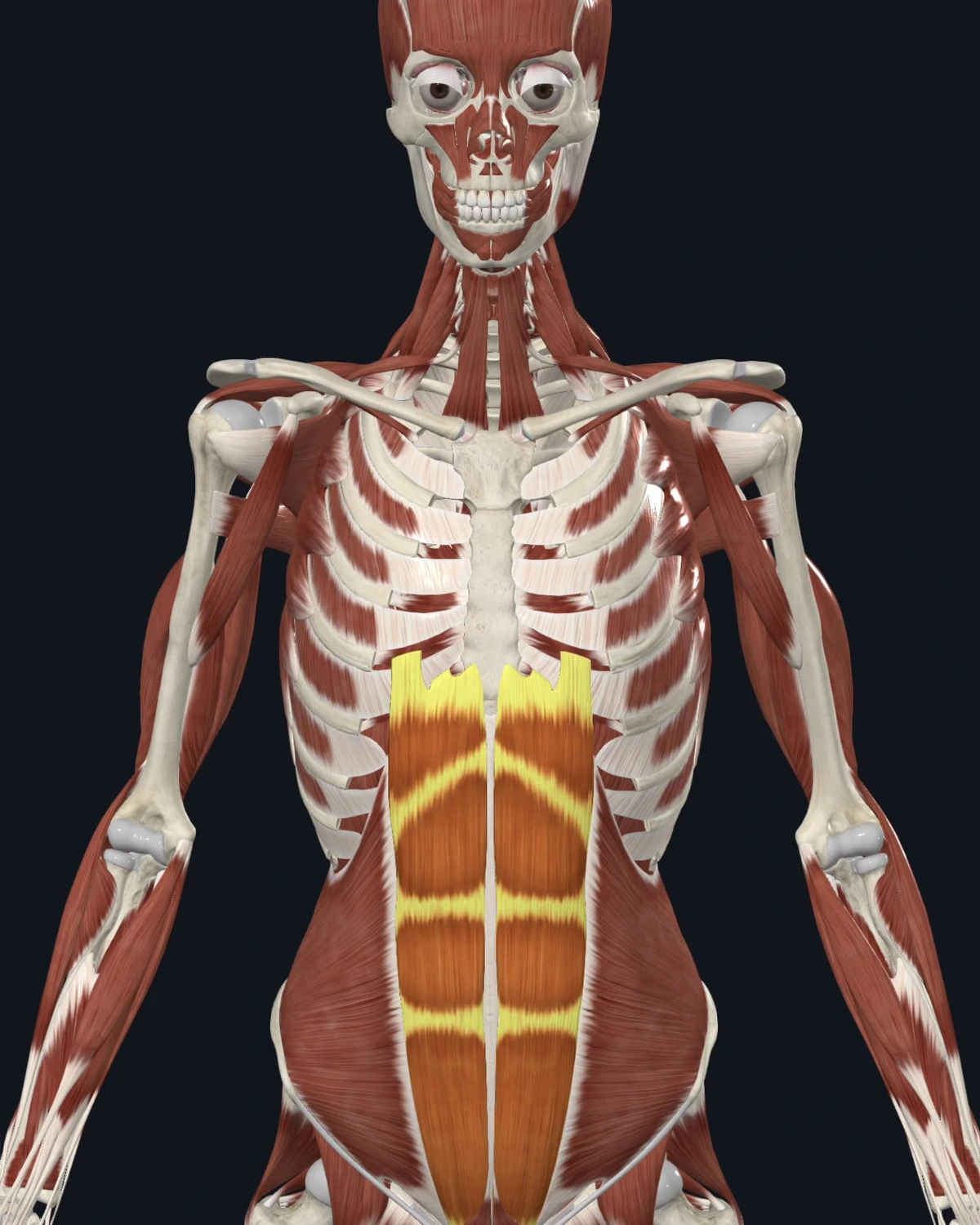
Attachments and action
Origin: The pubic crest and pubic symphysis.
Insertion: The cartilages of the fifth through seventh ribs and the xiphoid process.
Action: Flexion of the trunk, control of the pelvis against rib flare, and bracing of the abdominal wall during lifting, coughing, and exertion.
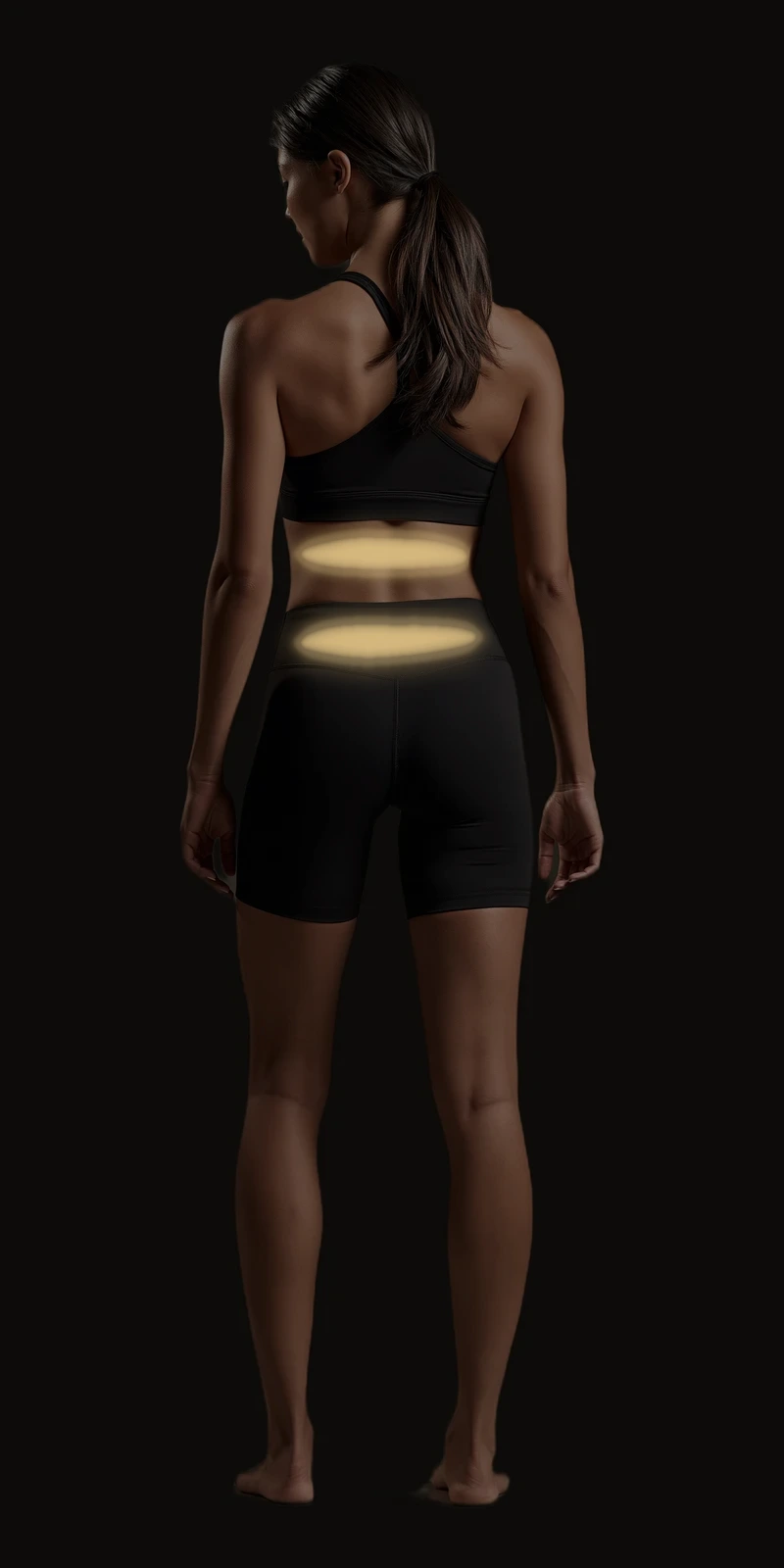
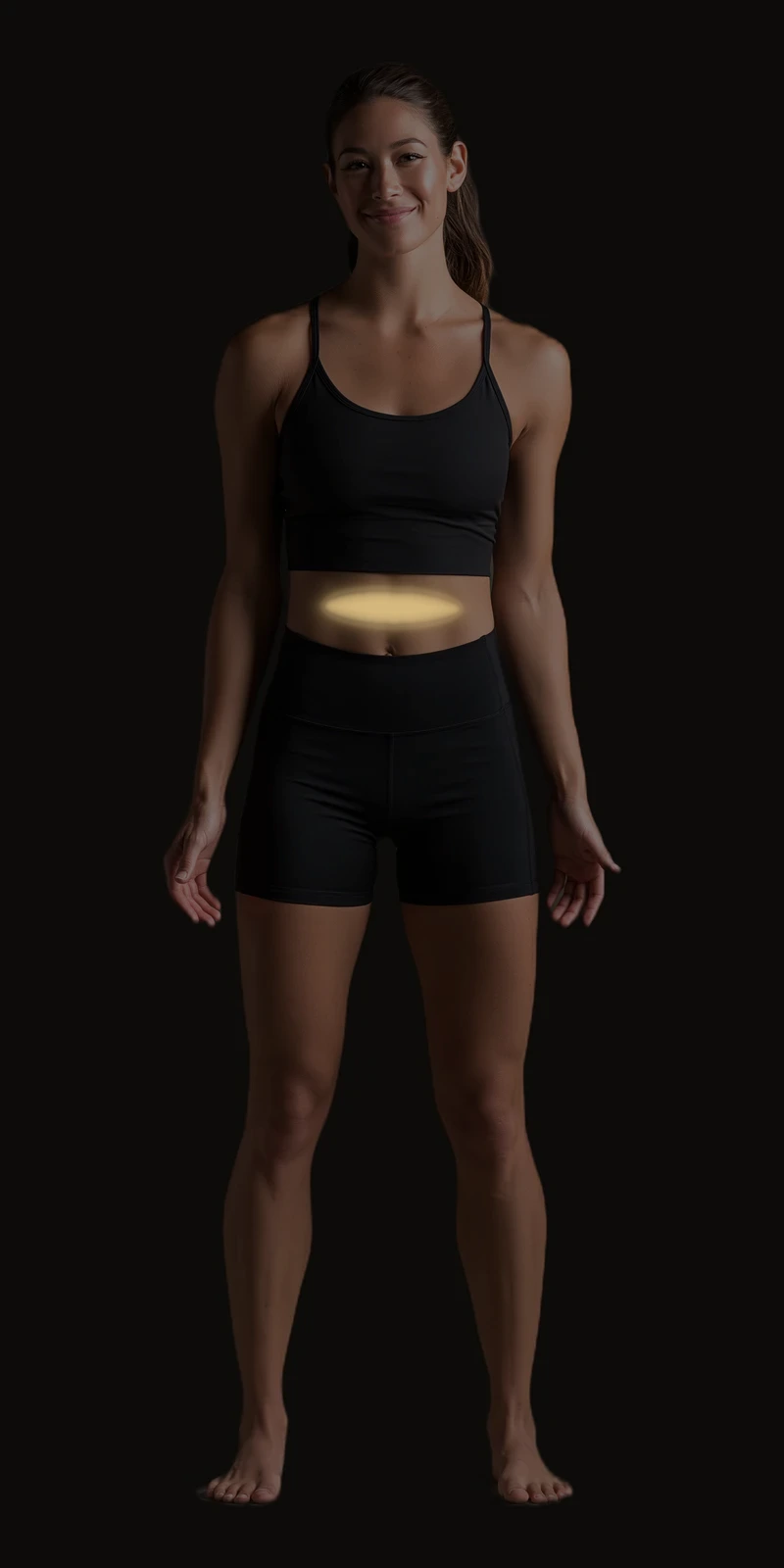
Where the pain is felt: Around the navel, spreading laterally across the mid abdomen, and in the right lower quadrant near McBurney’s point, where the pattern is documented to mimic appendicitis. The muscle also refers backward: upper fibers produce a horizontal band across the mid back at bra-strap height, and lower fibers a band across the low back and sacrum, both felt bilaterally.
Common causes: Unaccustomed abdominal exercise, chronic breath holding and abdominal gripping, direct strain from lifting, prolonged sitting in flexion, scar tissue after abdominal surgery, and visceral illness that leaves the wall guarded.
Patients say: A low backache in a horizontal band that no back exam explains. Cramping or fullness around the navel with normal GI workups. A sore lower right abdomen that has been imaged more than once.
When to get evaluated: New right lower quadrant pain with fever, nausea, or rebound tenderness is appendicitis until ruled out; medical evaluation comes first. Abdominal pain with unexplained weight loss, blood in stool, or nighttime symptoms needs medical workup before any muscle assessment.
How this muscle is examined and treated
Examination tenses the abdominal wall to separate wall pain from visceral pain, then palpates the rectus along its length for the points that reproduce the familiar abdominal or back pattern. Needling here is tangential and shallow along the muscle. Assessment and treatment happen in the same visit.
Related conditions
Low Back PainChronic Pain PatternsSports Injuries
This page is educational. It describes muscle referral patterns commonly associated with pain; it does not diagnose your condition. Individual patterns vary. For evaluation of your specific pain, see a licensed clinician. Seek immediate medical care for emergencies. Eugene Baek, L.Ac. · New Jersey License 25MZ00080600